



Move
Feature Description
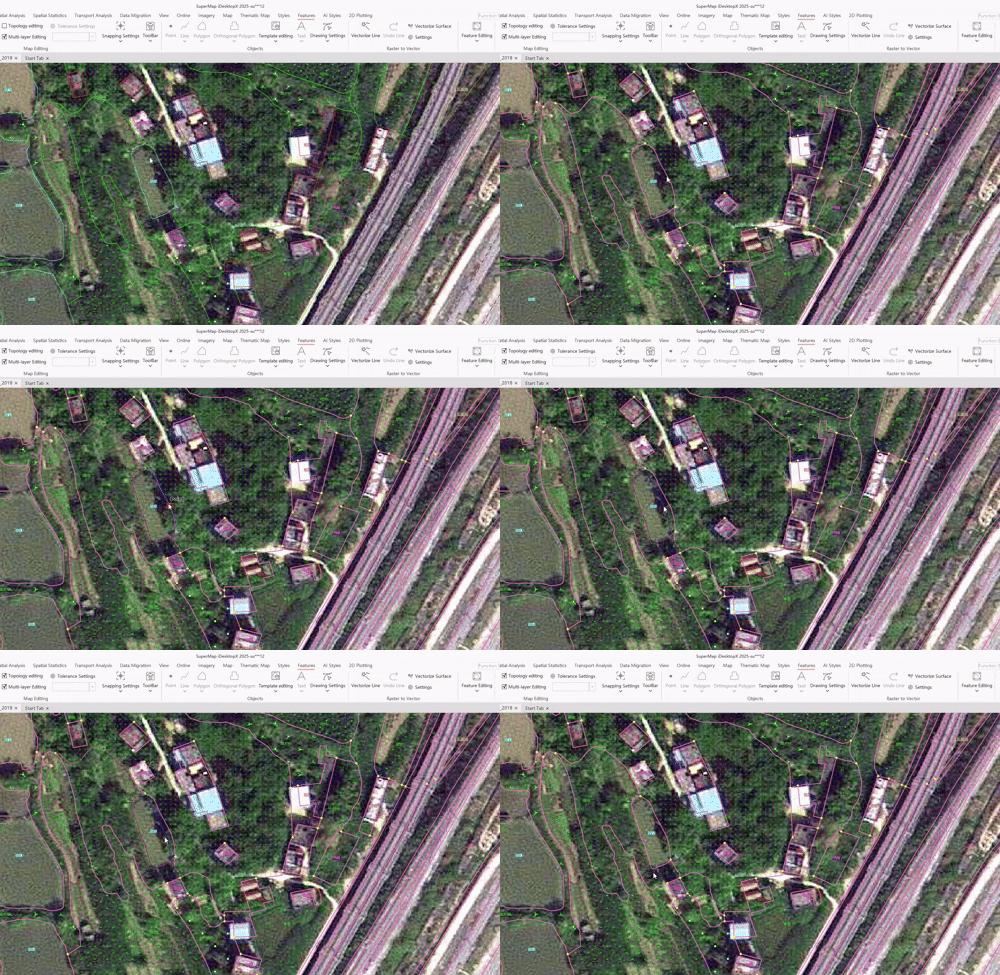
In topology editing mode, you can move topology edges and nodes. When moving, the shared objects connected to the topology edge or node will be stretched to maintain topological continuity. If the shared objects connected to the selected topology edge or node belong to multiple layers, all those layers will be edited simultaneously.
Operating Steps
- Enable the editable status of the relevant layers in the Layer Manager. Then, in the Edit Data tab -> ObjectEdit group -> Topology editing drop-down menu, turn on Topology edit switches to enable topology editing. Once enabled, the topology map will be overlaid on the map.
- Now you can directly left-click on the map to select the topology edge or node to be moved. When the color changes to dark blue, it is selected. You can hold down the Shift or Ctrl key to select multiple items.
- Hold down the left mouse button and drag.During the move, the map will display a rubber band line to preview the new position and show the stretching effect of the shared objects in real time. When moving a topology edge, the shape and direction of the selected edge will be maintained while stretching its shared objects. If you do not want the shared objects connected to the topology edge or node to be edited, you can uncheck them in the Shared object panel.
- After moving to the specified location, release the left mouse button to see the result. Click the left mouse button again to complete the move operation.
 Notes:
- You can set the topology edit tolerance. The tolerance refers to the distance between object nodes. Within this distance, edges and nodes are considered coincident and share the same location.
- By default, the system automatically calculates the minimum tolerance value based on the data. It is generally recommended to use the default value.
- To modify it, click the Tolerance Settings button. In the Topology edit tolerance dialog that appears, you can manually modify the value. After modification, click the Reset button behind the input box to revert to the default value.
Related Topics