



Erase
Function Description
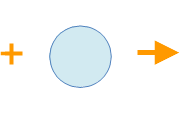
The erase function is used to remove the part of the target object that overlaps with the erasing object.
 |
 |
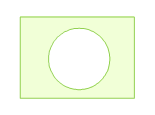 |
| Erased Object | Erasing Object | Result |
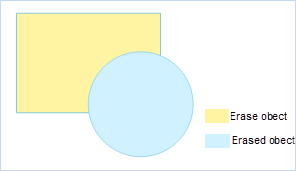
This function can switch the erase effect by holding down the Ctrl key. The erase effect while holding down the Ctrl key is as follows:
 |
 |
| Erasing and Erased Objects | Result |
- The erase function is applicable to region layers and CAD layers, and is only available when layer editing is enabled and objects are selected.
- The erased object and the erasing object cannot be the same object.
- The erased object can be a line object or a region object, but the erasing object must be a region object.
- The layer of the erased object must be editable. Supports Multi-layer Editing.
- The erase operation has certain requirements on data validity. Internal topology errors such as self-intersection are not allowed. It is recommended to validate topology on complex data and fix topology errors before performing the erase operation.
Function Entry
- Edit Data tab -> Object Editing group -> Face editing -> Face relationship -> Erase
Instructions
- In editable layer state, select one or more erasing objects (region objects).
- On the Edit Data tab, in the Face editing dropdown menu, click the Erase button in the Face relationship group to perform the erase operation.
- Mouse prompt: "Please select the object to be erased... Press Ctrl to switch to erase external." Select an object to be erased (line or region object), then click the left mouse button to complete the erase operation.
- You can sequentially select objects to be erased to perform the erase operation, and close the erase function by right-clicking.