



Instructions
Viewport Management function is used to manage the multi-view mode of the same scene window. It can split multiple layers in a scene into multiple viewports for split-screen display, while achieving linked browsing of multiple viewports.
When using the viewport management function in the Scene Rendering Engine V2 mode, it is recommended that the computer graphics card be 1080 Ti or above to ensure the correctness of the rendering results.
In ground-clamping mode, for line layers, polygon layers, raster layers, image layers, vector tile layers (*.scv) generated from lines or polygons, image tile layers (*.sci, *.sit), map tile layers (*.sci), and 3D tile layers (*.scp), when displayed in split screen, the layers shown in other windows are consistent with those displayed in the first viewport.
Terrain layers do not support setting scene split-screen display.
Access
- Scene tab -> Viewport Management group
Steps
- Create a new scene and add the datasets that need to be displayed in split screen to the same scene window.
- In the Scene tab, within the Viewport Management group, click the Viewport Mode dropdown button, and select the viewport mode for split-screen display from the dropdown options. The application provides six viewport modes: Single Viewport, Two Horizontal Viewports, Two Vertical Viewports, Three Viewports, Three Horizontal Viewports, and Four Viewports.
- Click the "Viewport Layer Settings..." button on the right side of "Viewport Settings". In the pop-up panel, set the layers to be displayed in each view window, as shown in the following figure:
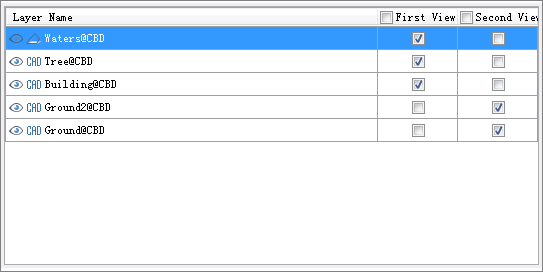
- In the layer list of the current scene window, check the layer checkboxes in the viewport column to set the layers to be displayed in each viewport, as shown in the figure above. If you check the checkbox in front of a viewport, it means that all layers in the current scene will be displayed in that viewport.
- After setting the above parameters, you can see the multi-viewport display effect in the scene, as shown in the following figure:
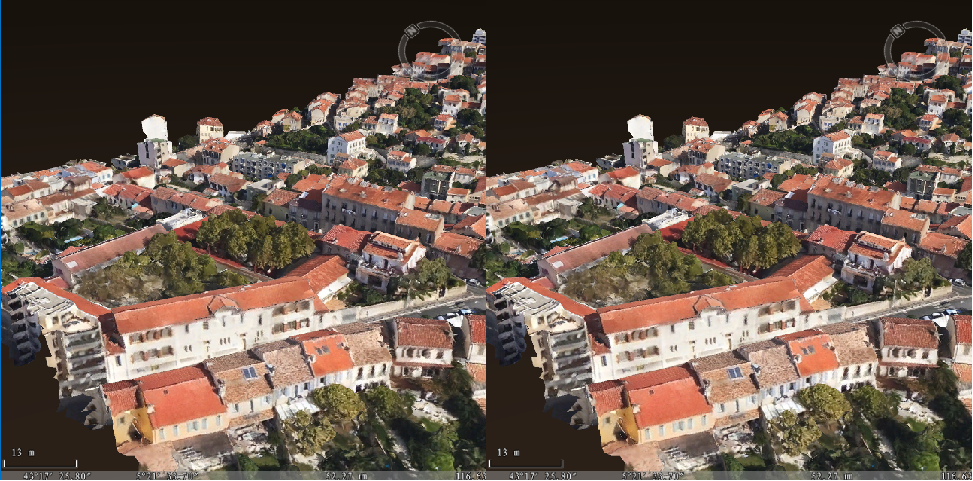
- After setting up multi-viewport scene browsing, you can perform 3D spatial analysis in different viewports. Each viewport only displays the analysis results of the current viewport. The supported multi-viewport analysis functions include Intervisibility Analysis, Viewshed Analysis, Dynamic Viewshed Analysis, Solar Analysis, and Skyline Analysis.